
Home · Guide
Why martial arts works for ADHD
Parents ask us this almost every week: my child can't sit still — would martial arts actually help? In our experience over 40 years of teaching, the answer is usually yes, and for a specific reason. Martial arts doesn't ask a child to suppress energy. It gives that energy a target, then attaches structure to it.
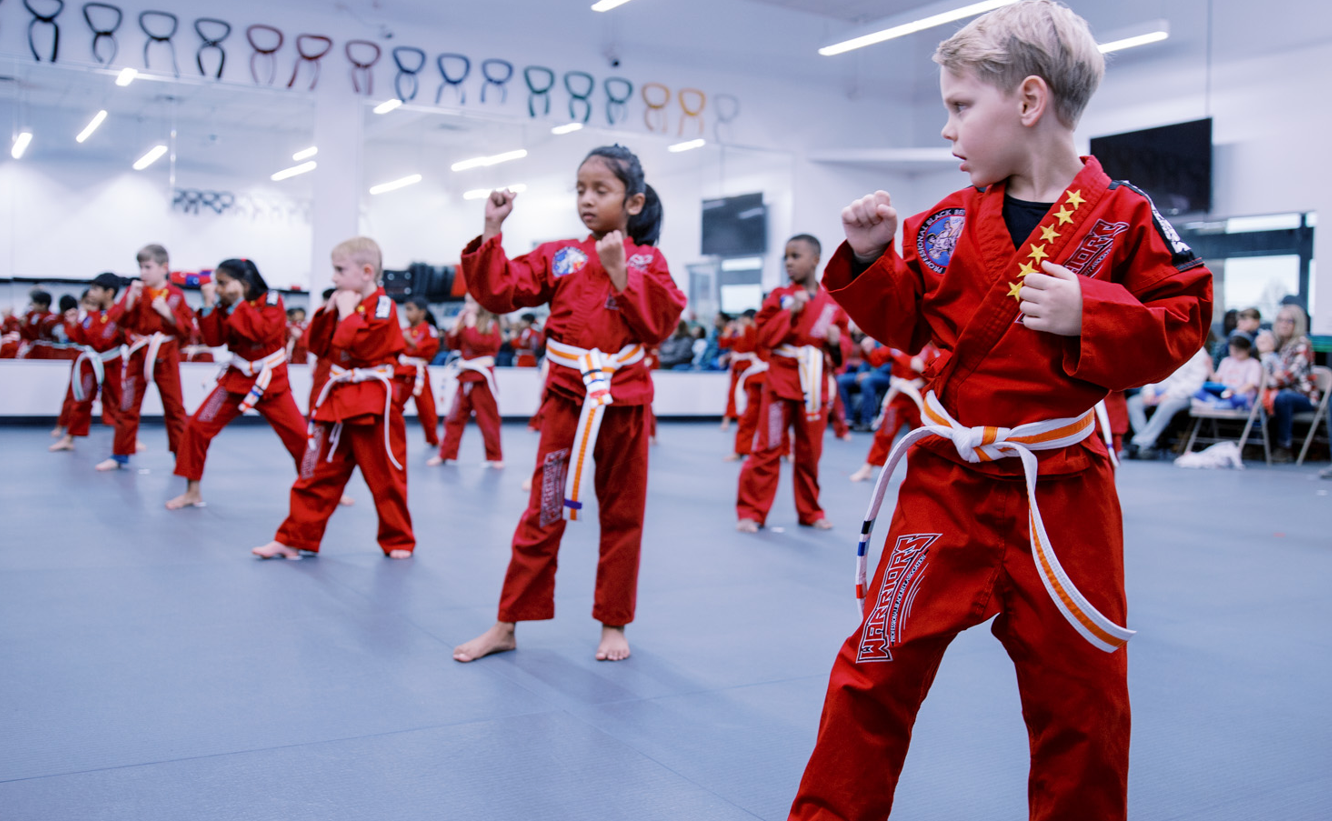
A taekwondo class is built out of short, repeatable tasks with an obvious start, an obvious finish, and immediate feedback. That's close to an ideal learning environment for a child whose attention comes in bursts. Instead of one long instruction, they get twenty small ones — and twenty small wins.
The four ingredients that build focus
- 1. Predictable structure. Every class runs the same way — bow in, warm up, basics, form, focus challenge, bow out. Predictability lowers the mental load, so more attention is left for the actual skill.
- 2. Short drills with clear targets. Ten kicks on a pad. One form, start to finish. A held stance for thirty seconds. Each rep has a finish line a child can see.
- 3. Immediate, specific feedback. "Chamber higher." "Eyes up." Kids hear exactly what to adjust in the moment, rather than a vague evaluation later.
- 4. Earned progress. Stripes and belts turn months of effort into something visible. For a child used to hearing what they did wrong, a belt promotion is proof they can commit to something hard and finish it.
Self-control is a trained skill
The most valuable moments in class are often the still ones. Standing at attention waiting for a command, holding a ready stance while another student tests, keeping hands down until the instructor says go — these are direct reps of impulse control.
We frame it for students as a switch they control: focus on, focus off. Once a child can flip that switch on the mat, we start asking them to use it at home and at school too. Instructors regularly ask students how homework and classroom behavior are going — the mat and the classroom are treated as the same training ground.
What parents tend to notice first
- Faster transitions — less resistance when it's time to switch tasks.
- Better sleep on training days, thanks to real physical output.
- Improved posture, eye contact, and "yes sir / yes ma'am" responsiveness.
- More persistence on hard homework instead of quitting at the first block.
- Calmer responses to frustration, especially after a few belt cycles.
These changes are gradual, not overnight. Most families see meaningful differences after two to three months of consistent attendance, twice a week.
How we set up classes for focus challenges
Classes at our Flower Mound academy are grouped by age and ability, starting at age 4. A brand-new student is never asked to hold attention longer than is realistic for their stage — the expectations grow with the belt. Instructors keep groups small enough to correct students by name, and we tell parents up front what we're working on with their child so the language stays the same at home.
For families who need more structure across the week, our afterschool leadership program adds homework time and daily training, and summer camps keep the routine going through the break.
Frequently asked questions
Is martial arts good for kids with ADHD?
Yes — the mix of movement, structure, short drills and immediate feedback suits how many kids with ADHD learn. They practice starting, stopping and holding attention, and get recognized for it every class.
What age should my child start?
Students can begin at age 4. Classes are age-based, so first-timers train alongside peers at the same stage.
Will it make an energetic child more aggressive?
No. Every technique is taught with strict rules about when it may be used. Control, respect and walking away come before anything else.
How often should we train?
Two classes a week is the sweet spot for building the routine. Consistency matters far more than intensity.
See if it clicks for your child.
The fastest way to know is to watch your child in a class. Claim a free intro class at our Flower Mound, TX academy and tell us what you're hoping to see change — focus, confidence, self-control — and we'll build the first weeks around it.