
Home · Guide
Why the taekwondo belt test matters
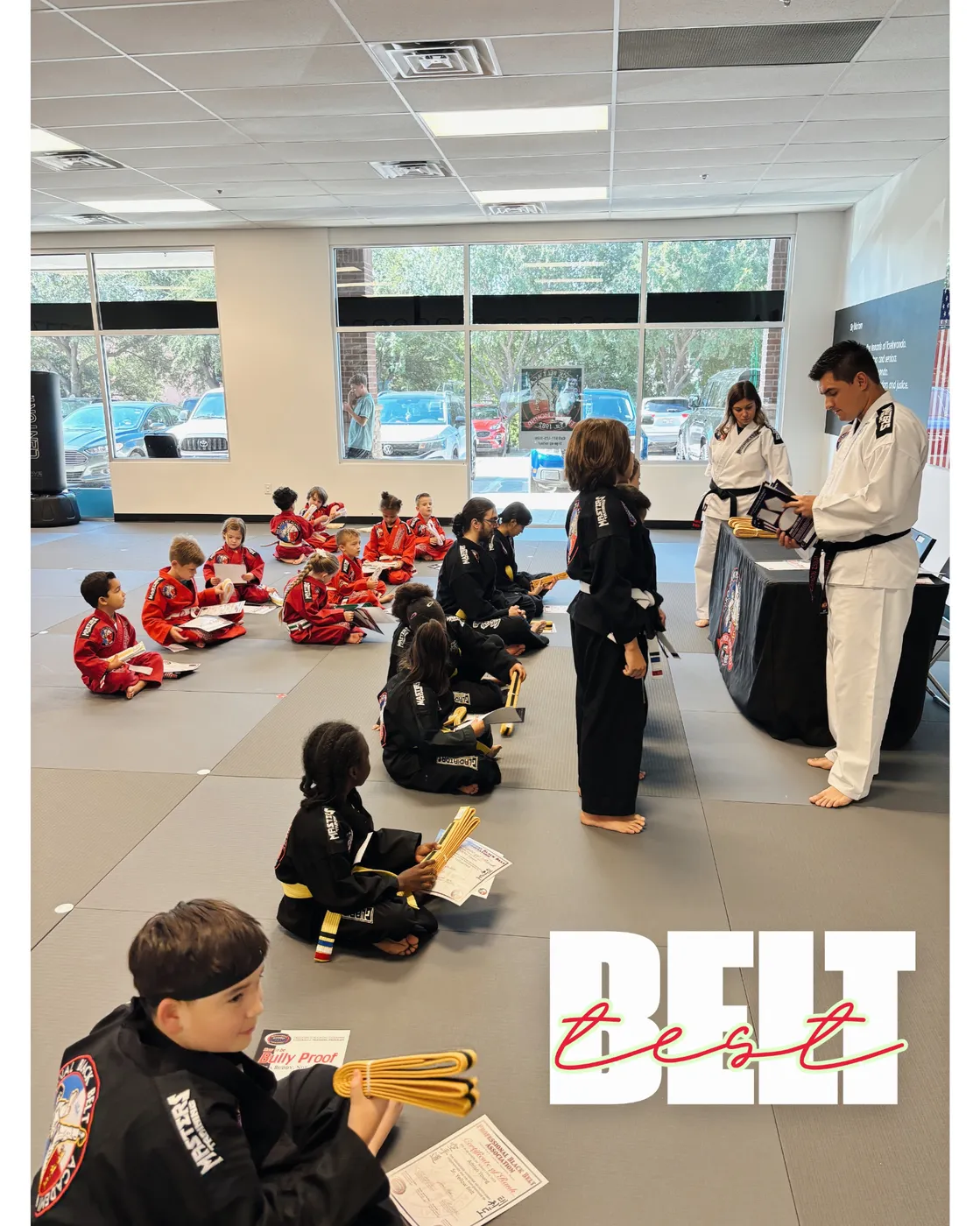
The belt test is the heartbeat of taekwondo training. It's the moment a student stands in front of their instructors, peers, and family and demonstrates everything they've absorbed since the last promotion. More than a checklist, it's a rite of passage that shapes character, discipline, and self-belief — the lessons that outlast any color of belt.
At Pro Black Belt Academy in Flower Mound, we've been guiding kids, teens, and adults through the road to black belt since 1982. Every test is built to challenge a student just past their comfort zone — exactly where growth happens.
The belt progression system
Most taekwondo schools follow a colored-belt progression from white through black. Each rank introduces new techniques, forms (poomsae), and responsibilities:
- White belt — the beginning. Focus, stances, basic kicks.
- Yellow & orange belts — fundamentals deepen; first form is mastered.
- Green & blue belts — intermediate kicks, combinations, and sparring concepts.
- Purple & brown belts — advanced poomsae, controlled sparring, leadership begins.
- Red & high red belts — preparation for black belt; physical and mental endurance tested.
- Black belt — not the end. The true beginning of mastery.
How often do students test?
At the lower ranks, belt tests happen every 8–12 weeks. As students advance, the time between tests gradually increases — the curriculum gets deeper, and mastery takes longer. The full journey from white belt to first-degree black belt typically takes 3 to 5 years of consistent training.
Students don't test on a fixed calendar. They test when their instructors confirm they're ready — when their techniques, attitude, and effort all earn the invitation.
What's on a taekwondo belt test?
Every test is built around four pillars:
- 1. Basics. Stances, blocks, hand strikes, and kicks performed with power and precision.
- 2. Poomsae (forms). The rank-appropriate choreographed pattern, executed with proper breath, timing, and intent.
- 3. Self-defense and one-steps. Practical applications of the techniques learned at that rank.
- 4. Board breaking. The signature finale — a controlled demonstration of focus, commitment, and accuracy.
Higher ranks add sparring rounds, terminology questions, and leadership demonstrations where senior students help teach lower belts.
The mental and physical benefits
Belt testing is one of the most powerful confidence-building tools we know. Kids learn to set a goal, work toward it for weeks, and perform under pressure. They feel real nerves — and then channel those nerves into focus. That single skill, repeated test after test, builds the kind of resilience that shows up in school presentations, tryouts, recitals, and eventually, job interviews.
Physically, every promotion raises the bar: better cardio, sharper coordination, stronger core, and faster reaction time. The visible reward — that new belt — is just the surface.
How parents can support a student testing
- Protect class attendance in the weeks before the test.
- Let your child teach you a technique at home — explaining cements learning.
- Encourage steady effort over perfection. Tests reward heart as much as skill.
- Show up. Watching a belt test is one of the most meaningful moments you'll share.
Frequently asked questions
How long does it take to earn a black belt?
Typically 3 to 5 years of consistent training and successful belt tests.
Are belt tests stressful for kids?
Challenging, yes — but supportive. Students only test once their instructors confirm they're ready, and learning to manage nerves is part of the lesson.
Do students ever fail a belt test?
Rarely, because we don't invite a student to test until they're prepared. When more practice is needed, we coach toward the next opportunity — failure isn't punishment, it's information.
Start your road to black belt.
Curious what your first belt test would look like? Come in for a free intro class at our Flower Mound, TX academy and meet the instructors who have guided three generations of students from white belt to black.